
Beyond Recognition: Why Widowhood Requires a New Development Imagination
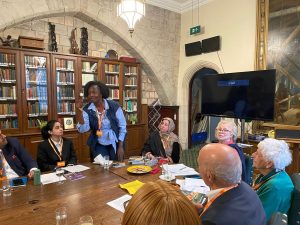 In the weeks following the #Skoll engagements and a visit to the British House of Commons, I have found myself reflecting on an uncomfortable contradiction within the global development ecosystem.
Widowhood is increasingly visible in policy spaces, yet remains largely invisible in investment priorities.
This contradiction matters.
Over the last decade, important milestones have emerged that signal growing recognition of widows’ rights. Internationally, the United Nations General Assembly elevated widowhood within global human rights discourse. Locally, the enactment of the Siaya Widows Protection Act (2025) in Kenya marked a historic shift toward embedding widow protection within enforceable governance systems.
These are not insignificant achievements. They represent years of organizing, storytelling, evidence gathering, and survivor-led advocacy. They also reflect an important ideological shift: widowhood is no longer being viewed solely as a personal loss or cultural issue, but increasingly as a structural justice concern connected to land rights, economic exclusion, violence, public health, and social protection.
And yet, despite these legislative gains, widowhood remains strikingly underfunded within mainstream development frameworks.
Why?
Part of the challenge is that widowhood continues to exist in the “blind spot” of global philanthropy and development investment. It is acknowledged emotionally, but rarely prioritized structurally. Many institutions still encounter widows primarily through humanitarian imagery — grief, vulnerability, dependence — rather than through the lens of systems, governance, and economic resilience.
But this framing is dangerously incomplete.
COVID-19 alone generated millions of widows globally while exposing the fragility of care systems and household economies. Across Africa and many parts of the world, conflict, climate instability, migration, and economic collapse continue expanding the number of women navigating widowhood under conditions of profound insecurity.
Widows are often the hidden stabilizers of families and communities. They carry caregiving burdens, sustain children through crises, maintain food systems, absorb economic shocks, and navigate social stigma simultaneously. Yet despite this, they remain largely absent from strategic investment conversations around resilience, climate adaptation, gender equity, and peacebuilding.
This is not merely an oversight.
It is a development blind spot.
At the Rona Foundation, our journey has involved challenging this invisibility by reframing widowhood as both a justice issue and an investment issue. Early in our work, we recognized that while stories created sympathy, evidence created institutional traction.
That realization transformed our approach.
With support from catalytic partners such as the African Women Development Fund (AWDF), Segal Family Foundation and ForumCiv through SIDA, we began documenting widowhood not simply as lived pain, but as measurable structural inequality. These partnerships helped grassroots widows move from being subjects of charity narratives into producers of evidence, advocates for reform, and participants in governance processes.
In many ways, these funders became what I call “womb-breakers” — institutions willing to help birth a new language around widowhood.
That shift ultimately contributed to the passage of the Siaya Widows Protection Act, which criminalizes harmful widowhood practices while strengthening protection and accountability systems at the county level.
But policy recognition is only the beginning.
The real challenge now lies in implementation infrastructure.
Too often, development systems celebrate legislative wins without investing in the mechanisms required to make those rights tangible at community level. There remains significant underinvestment in legal awareness, enforcement systems, local organizing, trauma-informed support, and widow-led accountability structures.
In other words, we are funding visibility more than durability.
The conversations around widowhood during the Skoll engagements gave me hope precisely because they suggested a growing willingness to confront this gap. Even within informal side conversations, there was increasing recognition that widows are not a peripheral demographic; they sit at the intersection of multiple global priorities — gender justice, food security, economic resilience, caregiving economies, and democratic participation.
What is needed now is not symbolic inclusion, but strategic investment.
We must move beyond treating widowhood as a niche social concern and begin understanding it as a critical indicator of whether justice systems are functioning for women at all.
The future of widowhood advocacy will not be built on sympathy alone. It will be built through long-term partnerships capable of translating policy into protection, evidence into investment, and visibility into structural change.
The laws are beginning to exist.
The question now is whether the global development ecosystem is prepared to invest in making them real.
Roseline Orwa, a widow champion, and the Founder and Executive Director of the Rona Foundation, a Kenyan widow human rights organization. She tweets @roselineorwa
